
Countries Facing Full Entry Restrictions
People from these twelve nations will not be allowed to enter the U.S. at this time. The policy applies to all types of travel, including both permanent relocation and temporary visits:
- Afghanistan
- Burma
- Chad
- Republic of the Congo
- Equatorial Guinea
- Eritrea
- Haiti
- Iran
- Libya
- Somalia
- Sudan
- Yemen
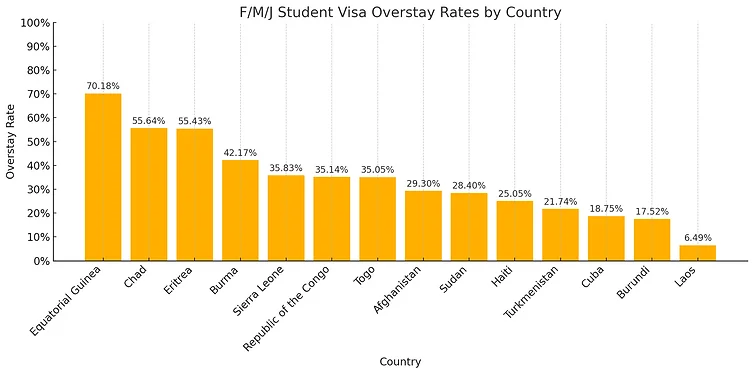
Each of these countries had either high visa overstay rates or weak cooperation in sharing personal or legal records. For instance, students from Chad and Equatorial Guinea were reported to have overstay rates above 50% for academic-related visas.
Loading reader polls…
Countries Facing Limited Entry Rules
For these seven countries, entry is still possible but more restricted. Only certain types of travel visas are affected:
- Burundi
- Cuba
- Laos
- Sierra Leone
- Togo
- Turkmenistan
- Venezuela
Student, tourist, or exchange-related pathways could fall under the new rules. In some situations, the duration of the visa might also be shorter than before.
Students Already in the U.S.
If your visa was granted before June 9, 2025, and you're currently in US, the updated policy will not apply to you. You can stay enrolled and carry on with your studies. Still, it's a good idea to keep in touch with your school's international office in case new details come up.
For Those Planning to Study in the U.S.
If you’re applying now and come from one of the listed countries, you’ll want to check the most recent entry rules. If you don't have a valid visa issued before the effective date, your application might face a hold or decline depending on the guidelines. It helps to speak directly with the university you're applying to for the most accurate updates or alternate options.
Exceptions
Some individuals are not affected by these changes. Those who still qualify include:
- U.S. greencard holders
- Dual nationals traveling with a passport from a country not on the restricted list
- Those holding visas in specific categories like A-1, A-2, C-2, C-3, G-1 to G-4, NATO-1 to NATO-6
- Athletes, coaches, and support teams taking part in major international sports events (like the Olympics or the World Cup), along with close family members
- People applying for immediate family immigrant visas (such as IR-1, IR-2, IR-5) if they can provide clear proof of identity and relationship
- Children being adopted under visa types like IR-3, IR-4, IH-3, and IH-4
- Afghans with approved Special Immigrant Visas
- U.S. government employees with special visa status
- Individuals from Iran who belong to ethnic or religious minorities and face persecution