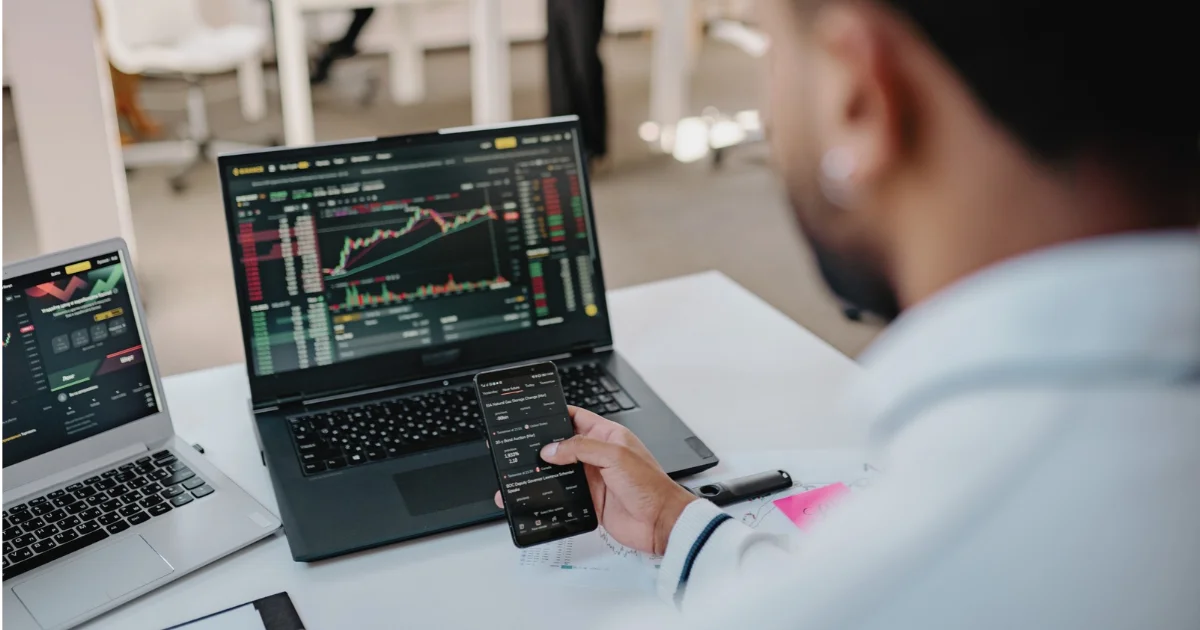
As global currency trading reaches record levels, financial literacy is gaining relevance for young professionals navigating international careers, foreign currencies and digital investment platforms.
Global foreign exchange trading reached a record $9.6 trillion per day in April 2025, an increase of 28% from 2022, according to the Bank for International Settlements (BIS).
The figures highlight the scale of international currency markets at a time when digital financial platforms are making trading and investment products increasingly accessible to younger generations.
This development highlights the importance for universities and educational institutions to focus on financial literacy and equip graduates with the necessary skills to handle their finances in a more interconnected economy.
Loading reader polls…
Foreign exchange is now relevant beyond just financial institutions and professional traders.
International students, overseas workers, freelancers and young professionals regularly encounter currency fluctuations through tuition payments, foreign earnings, international transactions and cross-border financial commitments.
Yet familiarity with digital banking and financial applications does not necessarily indicate an understanding of currency markets, investment risks or effective money management.
Financial literacy gaps persist among young people
Research published by the Organisation for Economic Co-operation and Development (OECD) in 2024 found that approximately 18% of students across the 14 participating OECD countries and economies lacked basic financial literacy proficiency.
The findings, drawn from the 2022 Programme for International Student Assessment (PISA), examined students' ability to understand financial concepts and apply them to practical financial decisions.
The assessment also found that more than 85% of participating students had purchased something online during the preceding year, demonstrating the extent to which young consumers were already participating in the digital economy.
The contrast between financial participation and financial knowledge has implications for education systems preparing students for employment and economic independence.
For young professionals entering the workforce, financial decisions can involve managing salaries, evaluating credit products, understanding interest rates and planning long-term savings.
Those pursuing international careers face additional considerations, including foreign exchange movements, international banking charges and income earned in different currencies.
Forex education gains relevance in a global economy
Foreign exchange, commonly referred to as forex or FX, involves converting one currency into another.
Forex trading refers specifically to buying and selling currencies, often with the intention of profiting from changes in exchange rates.
The BIS reported that the US dollar was involved in approximately 89% of all foreign exchange transactions in April 2025. Trading remained concentrated in major financial centres, including the United Kingdom, the United States, Singapore and Hong Kong.
The international reach of these markets demonstrates the importance of currency movements to global trade, investment and cross-border employment.
For young professionals, understanding foreign exchange can have immediate practical applications.
A Filipino freelancer earning in US dollars, for example, may receive a different amount in Philippine pesos each month because of exchange-rate fluctuations. An international student paying tuition in Australian dollars may experience similar changes in education expenses.
Financial education covering exchange rates, inflation, interest rates and international banking can help individuals understand these movements and plan their finances more effectively.
Specialised forex education introduces additional subjects, including currency pairs, economic indicators, market analysis, trading strategies and risk management.
However, financial knowledge and speculative trading serve different purposes. Understanding foreign exchange can be useful without participating in currency trading.
Access to trading involves financial risks
The availability of online trading platforms has introduced new opportunities for individuals interested in financial markets. It has also increased the importance of distinguishing financial education from investment promotion.
Forex trading can involve substantial financial losses, particularly when traders use leverage, which allows them to control positions larger than their initial investment.
In the Philippines, the Securities and Exchange Commission published an advisory on 24 August 2026 concerning unauthorised solicitation of investments for forex trading and related schemes. The regulator also advises investors not to engage in foreign currency trading without understanding its risks and being able to afford potential losses.
Securities and Exchange Commission
These warnings are particularly relevant to inexperienced individuals considering online trading courses or investment opportunities advertised through social media.
Financial education can help prospective investors evaluate trading products, recognise misleading claims and understand the potential consequences of speculative investment.
However, completing a trading course does not establish that an individual is financially prepared to trade or that a particular trading strategy will be profitable.
Early financial education linked to stronger money management
OECD research has identified an association between financial knowledge and responsible financial behaviour.
Its PISA 2022 financial literacy assessment found that high-performing students were 72% more likely to save money and 50% more likely to compare prices before making purchases than low-performing students. These findings describe associations rather than proving that financial education directly causes those behaviours.
The results provide evidence for expanding financial education during secondary and tertiary studies, particularly as students gain access to banking services, credit facilities and digital investment products.
Practical financial education could include personal budgeting, debt management, savings, taxation, international payments and investment fundamentals.
Universities offering international business, economics and professional programmes could also incorporate currency risk and cross-border financial management into relevant courses.
For students preparing to study or work overseas, these subjects have direct applications in managing education expenses, foreign earnings and financial obligations across different countries.
Financial capability becomes part of graduate readiness
The expansion of global financial markets and international employment has created additional financial responsibilities for graduates.
While academic qualifications and professional experience remain central to career development, financial knowledge can influence how effectively individuals manage their earnings, evaluate financial products and plan for future commitments.
The growth of forex markets illustrates the scale of international financial activity, but it should not be interpreted as evidence that young people need to become currency traders.
For education providers, the opportunity lies in developing financial capabilities that remain useful regardless of a graduate's profession or investment interests.
As students prepare for increasingly international careers, financial literacy is emerging as a relevant component of professional preparation, with applications extending from everyday money management to understanding global economic developments.

SH MCC
SH MCC brings together independent writers contributing to the Students Herald editorial team. Our coverage explores international education, student experiences, institutions, education agencies and the developments shaping study opportunities. Each contributor brings an individual perspective to stories prepared for Students Herald readers.


